
Confindustria Ceramica’s preliminary 2025 figures put Italian tile production at an estimated 388 million sqm (+5% on 2024) and total sales at 386 million sqm (+2%). Exports are up while domestic sales are broadly stable.
The Italian ceramic tile industry has ended 2025 on a positive note. After two years in which output hovered at around 370 million square metres, Confindustria Ceramica’s preliminary full-year figures point to a production volume of approximately 388 million sqm, 5% up on 2024.
Total sales also continued to climb gradually, up from 378 million sqm in 2024 (+2.5% on 2023) to 386 million sqm in 2025 (+2% on 2024).
Domestic Italian sales remained stable at around 85 million sqm (+0.8%), while exports showed greater momentum, rising by 2.4% from 293 million sqm to around 300 million sqm.

Photo courtesy of Cotto D'Este
Mixed performances across individual markets
In Europe, the recovery of Italian exports was more muted in the main EU markets, held back by weaker economic conditions and construction investment, particularly in France and Germany, while sales growth was stronger in Eastern Europe.
Exports to the Middle East also performed well, with Gulf markets remaining an important outlet for Italian-made ceramic tiles.
In the United States, the third largest foreign market for Italian tiles, the introduction of tariffs impacted export performance during the year, with strong first-half growth (driven by American customers bringing forward their purchases) followed by a second half that absorbed the earlier spike. Here, Italian manufacturers are now pinning their hopes on the upcoming Coverings trade show in Las Vegas, due to be held from 30 March to 2 April.
Finally, Africa remained a marginal but growing market for Italian ceramic tiles in 2025.
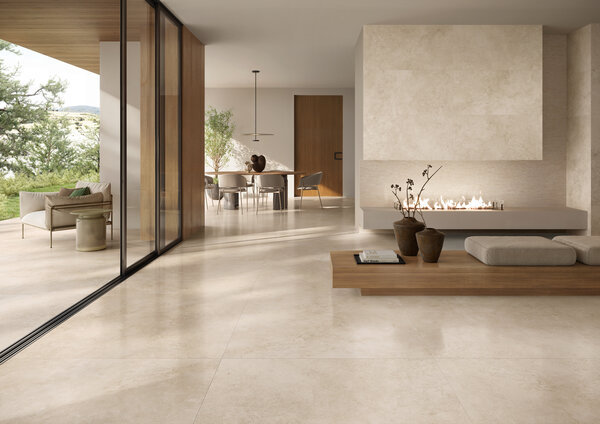
Photo courtesy of Fincibec
Industry challenges on the EU agenda
According to Confindustria Ceramica Chairman Augusto Ciarrocchi and Director General Armando Cafiero, speaking on the sidelines of the presentation of the 2025 results, the biggest challenges facing the Italian ceramic industry today are energy costs, the ETS system, aggressive international competition and widespread dumping practices.
These are issues in which European institutions are directly involved, as their decisions will shape the sector’s future competitiveness.
Two fundamental dossiers are currently on the table in Brussels: the review of the EU ETS system for CO2 emissions and the update of the Ceramic BREF, the European document defining the Best Available Techniques that must subsequently be incorporated into companies’ environmental permits.
These issues also took centre stage at the European Ceramic Days organised by Cerame-Unie in early December in Brussels, alongside the 31st European Policy Ceramic Forum (EPCF) chaired by MEP Elisabetta Gualmini. Italy, represented by a large delegation, underlined not only the enormous efforts the ceramic industry has already made to reduce its environmental impact, but also the risks facing the sector if urgent action is not taken to mitigate the combined effect of overly ambitious European decarbonisation targets, rising energy and CO2 prices, and unfair competition from third countries.
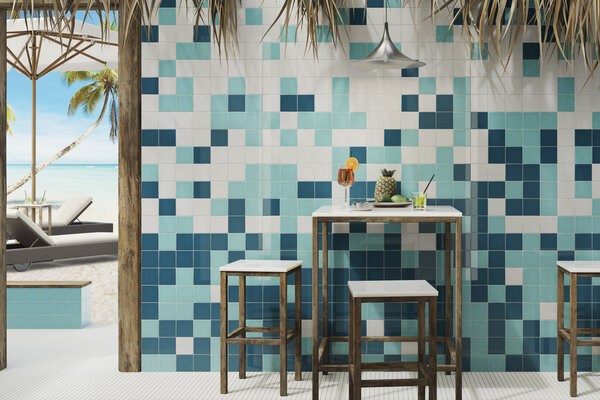
Photo courtesy of Bardelli
The ETS system drains essential resources from investments
“Over the last ten years, the Italian ceramic industry has invested more than €4.3 billion in the energy transition, but the EU ETS system is imposing enormous costs on a sector that accounts for just 0.9% of European emissions covered by the ETS,” noted Augusto Ciarrocchi. “Between 2021 and 2025, Italian manufacturers spent €130 million per year on the ETS, a figure that is set to rise to €180 million over the next five years and then exceed €225 million per year from 2031 onwards. That means lower margins and fewer investments, and a greater risk of delocalisation, while the European market faces ever tougher international competition, sometimes exacerbated by dumping practices and state aid.” In many cases, competitors also fail to comply with the environmental, social and wage regulations that Europe aims to uphold.
“In this context, if it is not possible to suspend the ETS pending its review, at least the measures that are already largely provided for in current legislation must be adopted as a matter of urgency,” continued Ciarrocchi.
The requests from Italian producers are the same as those shared with their European counterparts, namely:
• Including ceramics in the CBAM, which needs to be amended to ensure protection from carbon leakage and reimbursement for exporters;
• Deferring the reduction in free ETS allowances until technological alternatives are available;
• Extending compensation for indirect costs to self-generated energy;
• Simplifying the ETS for SMEs and providing higher opt-out thresholds;
• Correcting the Worst Performers mechanism to avoid distorted classifications that unfairly penalise combined cycle plants.
The revision of the Ceramic BREF
Confindustria Ceramica’s top management reported positive progress on the revision of the Ceramic BREF on Best Available Technologies.
“The draft published in November by the European Commission shows encouraging progress, partly thanks to the work carried out together with the Italian Ministry of the Environment and the Emilia-Romagna regional government,” Armando Cafiero said. “Several emission limits have been brought back to technically reasonable levels, some performance parameters have been corrected, and an integrated approach to reducing emissions is finally being adopted. The final meeting is scheduled for February in Seville, but the real challenge will be the implementation stage. We hope to have a constructive dialogue with the Emilia-Romagna regional government so that repetitive requirements can be streamlined while maintaining the high level of environmental protection that is already in place.”
Stay updated on the industry with curated data and insights each month: subscribe to the TECNA Magazine
POWERED BY CWR
PUBLICATION
15/01/2026
Other related news

20/08/2025
Industry and the challenge of artificial intelligence

04/02/2026
Advanced mineral solutions for large slab production

16/02/2026
The sustainable transition in the field of ceramic body preparation

24/03/2026
European construction set for recovery

22/04/2026
Algerian construction industry on the rise

12/05/2026
The Smart Factory: how to simplify complexity in ceramic production

24/06/2026
The Italian ceramic industry is worth €7.5 billion

17/09/2025
The future of construction in Europe between recovery and uncertainty

15/10/2025
Heavy clay machinery: the Italian industry holds its ground in international markets

14/11/2025
Clay building products: trends and figures of the Italian industry

04/12/2025
Not just large formats: the digital revolution also embraces special pieces

10/12/2025
World production of ceramic tiles

12/12/2025
The global exports of ceramic tiles decreased to 2.67 billion sqm in 2024

26/01/2026
Ceramics take center stage in the “total look” of living spaces

19/03/2026
TECNA at Expo Revestir: securing a presence in key markets