
No longer just a structural material for floors and wall coverings, ceramics are increasingly becoming key elements in interior design — from furniture to kitchen and bathroom countertops, and decorative features for both indoor and outdoor spaces. In this evolution, new surface finishing technologies play a crucial role.
Today, ceramic surfaces are fully integrated into the total look of living spaces, closely reflecting trends in fashion and interior design. Once restricted to structural floor and wall applications, ceramics now feature prominently in furniture, kitchen worktops and a host of indoor and outdoor elements.
Coordination and synchronisation are paramount in this new approach, which includes interiors and exteriors, floors, wall coverings and furnishings. As ceramic tiles move beyond traditional uses, they must also satisfy new functional requirements, ranging from classic anti-slip performance to innovative antibacterial treatments.
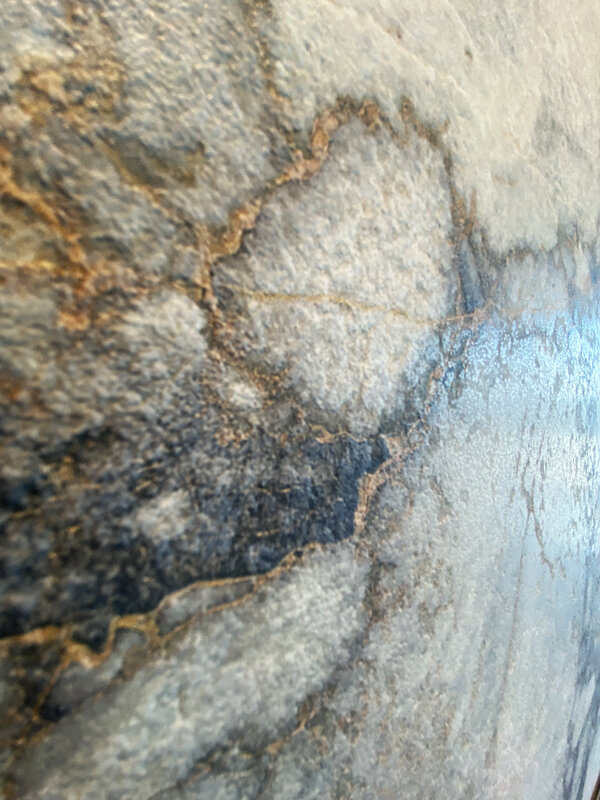
Photo courtesy of WOF Project
From "total look" to "total finishing"
The latest evolution in ceramic aesthetics and applications focuses on three-dimensionality, material depth and tactile appeal. Because they are used in coordinated interiors and furnishings, ceramic tiles must interact harmoniously with other materials such as wood and – in the case of outdoor settings – with the surrounding natural landscape.
To address these emerging market trends, SACMI has developed a comprehensive technological approach covering the entire production cycle: from forming on the Continua+ line (with V-Nature systems and next-generation structured belts) through to decoration with the Deep Digital Line and the post-firing finishing technologies described here.
Post-firing processes – lapping, brushing, satin finishing, polishing and protective treatments – are now critical to achieving all the desired effects for any application. Through BMR, SACMI offers the broadest range of surface finishing operations in the industry, marking a shift from largely subjective methods to modern, digitalised systems that incorporate artificial intelligence and vision technology. This results in high-quality, repeatable processes together with a high level of customisation.
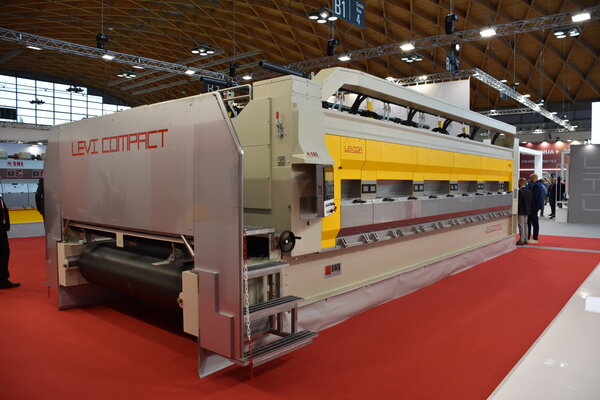
Levicompact
The WOF project and the Leviga range
One of the most significant breakthroughs in surface finishing is the WOF (World of Finishes) project, built around BMR’s Leviga range. This new concept of digital finishing achieves impressive results, particularly on large-format tiles, including natural surface textures and colour tones that were once unimaginable.
By combining tools and software, WOF allows manufacturers to obtain any type of finish on lapping machines, creating unique, custom surfaces that remain perfectly reproducible thanks to state-of-the-art technology and a tried-and-tested formula.
LeviCompact, the latest addition to the Leviga range, is BMR’s exclusive patented solution for lapping, satin finishing and polishing large slabs with widths of 1200 mm, 1600 mm and 1800 mm. It is the first system in the world to incorporate two parallel oscillating bridges with ten heads each, delivering higher speeds and superior processing consistency, productivity and aesthetics compared to traditional setups.
The system’s performance is further enhanced by its digital, customised approach. On LeviCompact, proportional valves regulate the pressure digitally. The operator can set the pressure applied to the material in three different working zones (operator side, centre and opposite side) and assign specific absorption setpoints. The system then balances pressure automatically, optimising material removal and preventing waste.
Controls and parameters are easy to manage thanks to the new interface. The machine is also equipped with a system that logs abrasive changes: when the operator authorises a tool change, the machine records the hours worked. In this way, the supervisor sends an alert to the operator when the tool needs to be replaced, streamlining maintenance and minimising downtime.
Supershine plus: super-polishing and surface functionalisation
WOF is complemented by Supershine Plus, the latest evolution of BMR’s Supershine technology. Available in 16- or 20-satellite-head configurations, the new version allows for independent management of multiple products thanks to peristaltic dosing pumps equipped with dual feed channels.
The advanced pumping system is based on high data-transport capacity EtherCAT communication for faster and more accurate dosing and reduced material waste, while precise temperature control ensures a more uniform finish. Supershine Plus is the first dry super-polishing machine on the market to combine polishing and surface functionalisation in a single, fully digital process. This allows operators to program a first product directly from software to achieve the desired effect, then a second product to give the surface specific properties such as resistance to scratches, wear, stains and mould.
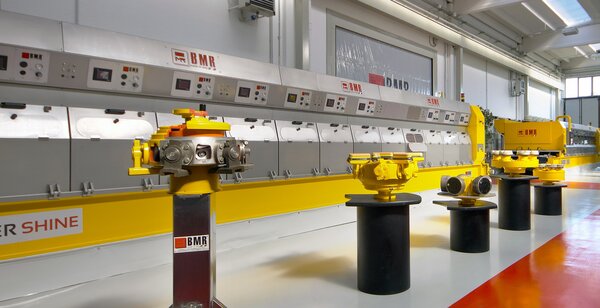
Supershine Plus
Vision systems and digital controls
Quality and process control are paramount for both two- and three-dimensional surface applications. In partnership with Italvision, SACMI has developed specific control systems, such as AI-based vision devices that continuously monitor surface quality and decoration alignment, with the option of real-time feedback to the line.
All solutions (such as digital decoration and finishing) can be integrated with new control systems such as Line UP for automatic slab synchronisation and centring with integrated digital graphics management, and Line Manager which coordinates multiple decoration/finishing devices (or even multiple lines) in sequence. On BMR equipment, this means every operation can be overseen from a single interface, allowing quality and performance indicators to be monitored at all times.
Stay updated on the industry with curated data and insights each month: subscribe to the TECNA Magazine
POWERED BY CWR
PUBLICATION
26/01/2026
Other related news

20/08/2025
Industry and the challenge of artificial intelligence

04/02/2026
Advanced mineral solutions for large slab production

16/02/2026
The sustainable transition in the field of ceramic body preparation

24/03/2026
European construction set for recovery

22/04/2026
Algerian construction industry on the rise

12/05/2026
The Smart Factory: how to simplify complexity in ceramic production

24/06/2026
The Italian ceramic industry is worth €7.5 billion

17/09/2025
The future of construction in Europe between recovery and uncertainty

15/10/2025
Heavy clay machinery: the Italian industry holds its ground in international markets

14/11/2025
Clay building products: trends and figures of the Italian industry

04/12/2025
Not just large formats: the digital revolution also embraces special pieces

10/12/2025
World production of ceramic tiles

12/12/2025
The global exports of ceramic tiles decreased to 2.67 billion sqm in 2024

15/01/2026
The Italian tile industry ends 2025 on a positive note

19/03/2026
TECNA at Expo Revestir: securing a presence in key markets